
The Invisible Flywheel #14
Nivoda quietly transformed one of the most traditional supply chains in the world... diamonds. This edition explores how a B2B marketplace turned complexity into clarity, lowered risk, and created a flywheel of growth that every product team can learn from.


Transforming a 100-year-old supply chain into a quiet growth engine.
Hey everyone ☕
You know I love products that transform industries without making a lot of noise.
This time, the story isn’t SaaS.
It’s not AI.
It’s not a new productivity tool...
It’s diamonds 💎💎💎
More than 2 million of them.
Natural, lab-grown, and colored gemstones, all flowing through a platform most consumers have never heard of: Nivoda.
Imagine giving any jewellery retailer, from a small boutique to a mid-sized chain, instant access to a global inventory without buying a single stone upfront.
Now imagine removing the sourcing friction, the trust gaps, and the logistical nightmare behind the scenes.
That’s the promise of Nivoda! A B2B marketplace that quietly turned one of the most traditional supply chains into a predictable, digital system.
Today, we’ll explore how they did it and what we as tech people can take from it.

The Invisible Infrastructure Behind a Legacy Industry ⚙️
To understand Nivoda, start with the old world of diamond sourcing:
- Multiple suppliers.
- Manual communication.
- Inventory risk.
- Unclear quality.
- Customs, shipping, returns, disputes, all expensive, all slow.
Nivoda re-architected this process into something that feels almost SaaS a-like.
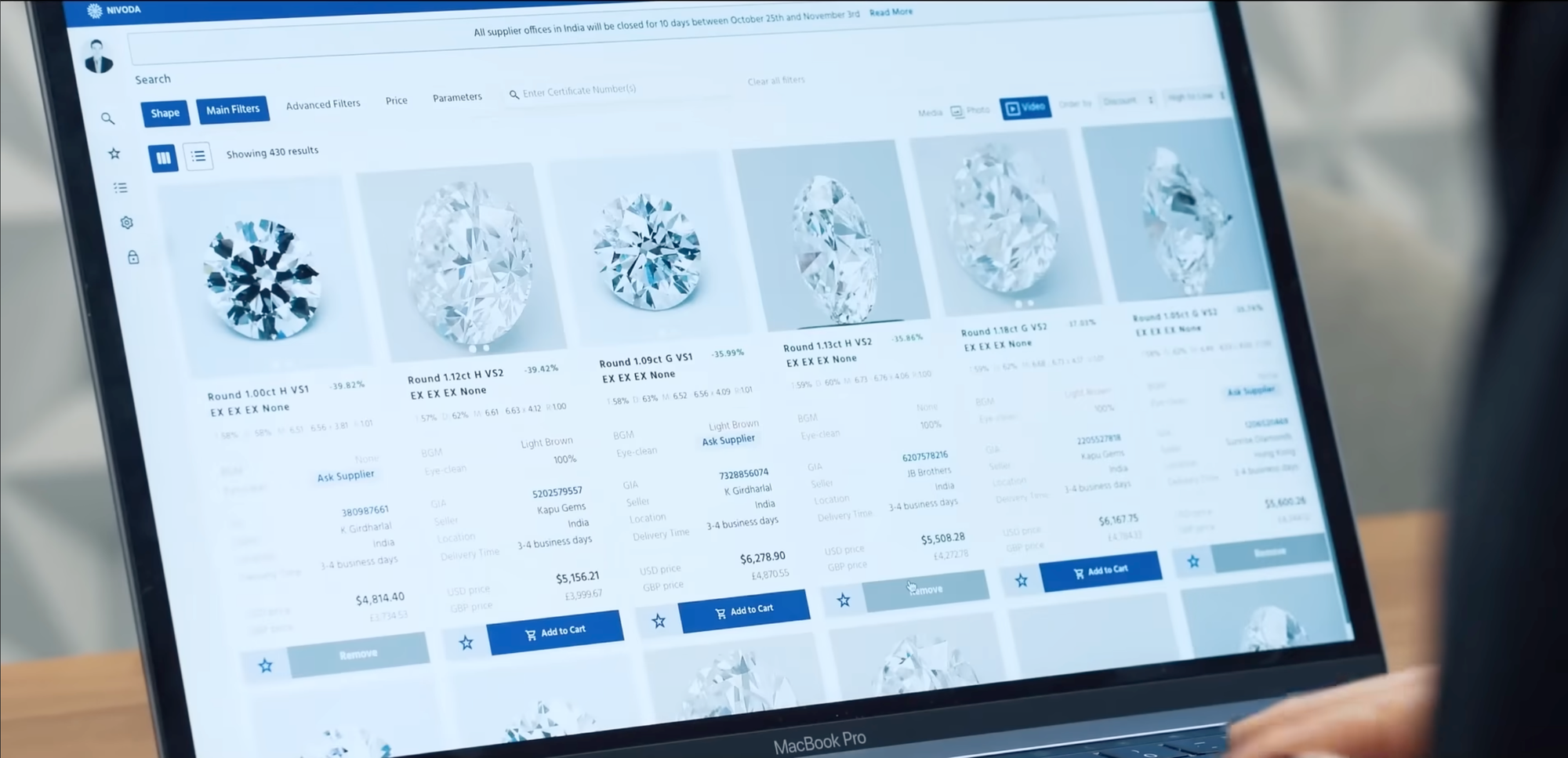
- A global catalog, searchable by dozens of attributes.
- One checkout that consolidates orders from multiple suppliers.
- A single invoice and shipment, backed by Nivoda’s quality check.
- Predictable operations, so retailers don’t deal with logistics unless they want to.
The complexity didn’t disappear, the product absorbed it.
This is one of my favorite patterns in product design:
when a company takes a painful, operationally heavy workflow and turns it into a smooth experience that users barely have to think about.
The Insight: Flexibility Creates Demand ⚡
Jewellery retailers always faced a difficult trade-off:
Buy inventory upfront and risk being stuck with stones for years, or limit selection and disappoint customers.
By making diamonds “on demand,” Nivoda removed the risk entirely.
Example:
A customer wants a 1.3ct lab-grown oval with very specific criteria?
The retailer pulls out Nivoda, filters down, selects a few stones, and only purchases when the customer commits.
This unlocks a new behavior:
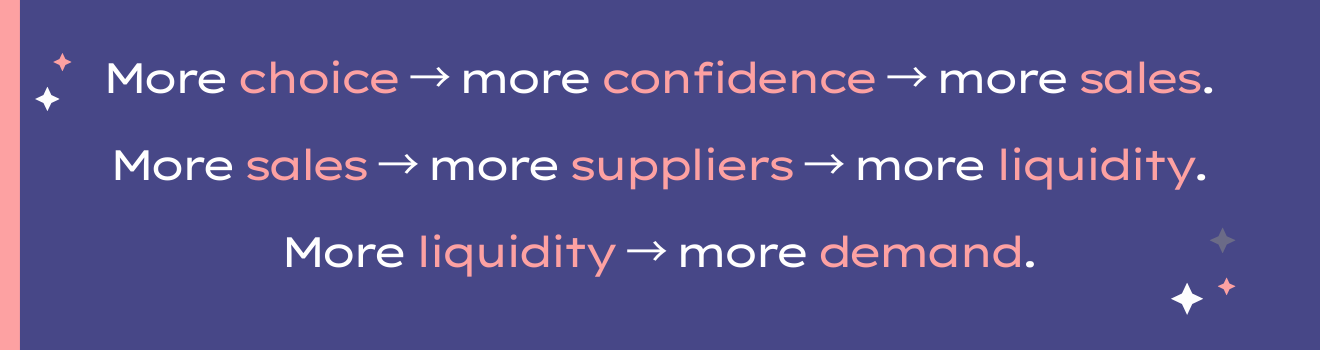
A supply-side flywheel that compounds over time.
Not through upsells.
Not through marketing.
Just through a product design that enables retailers to say “yes” far more often than before.
Why It Works 💡
UX Designed for Decision-Making
Diamonds are complex products, every stone has 20+ attributes (starting with the 4Cs: cut, color, clarity, and carat weight, and much more), certifications, and price variables.
Nivoda builds clarity into the complexity:
- Strong filtering and comparison tools
- Clear availability and pricing
- Supplier transparency
- A predictable buying flow
It’s not meant for browsing, it’s meant for choosing.
This is a subtle but important distinction in B2B UX:
Your UI should accelerate decisions, not just display information.
The Macro Trend: Lab-Grown Diamonds
Another side to this story is the rise of lab-grown diamonds and how it changed the economics of jewellery retail.
These diamonds are structurally identical to natural diamonds, more affordable, and increasingly aligned with consumer values around sustainability.
Today, about 18% of global diamond supply is lab-grown (you can dive in here).
Forecasts expect this number to grow sharply in the coming decade.
Nivoda lands right in the center of that shift, offering retailers flexibility in an industry where the product itself is evolving.
Timing matters.
Markets matter.
And Nivoda captured both.
.....
And this isn’t happening in isolation. Crunchbase recently highlighted how consumer-facing gadget and retail startups are seeing declining investment, while platforms that solve operational and supply-chain pain points are rising.
It’s a reminder that the next wave of innovation often happens behind the scenes, not in flashy consumer categories.
 Joanna Glasner
Lessons for Product Managers 🎯
1. Productise the painful part
Every industry has an overlooked, messy, operational bottleneck.
Sometimes it's super boring... But!
When you turn that bottleneck into a feature, you build leverage, and often, a moat.
2. Reduce risk to unlock new behaviors
When retailers no longer had to carry inventory, they explored more, sold more, and experimented more.
Make something safer to try, and users will expand their usage naturally.
3. Operational UX is real UX
Shipping, customs, returns ,they may be backstage, but they shape the user experience.
A great product doesn’t end at the screen.
4. Build around macro shifts, not against them
Sustainability, affordability, and shifting consumer values pushed lab-grown diamonds to the mainstream.
Nivoda aligned with the trend rather than resisting it.
5. Markets that look “boring” are often the richest with opportunity
Diamonds, logistics, compliance, shipping — these are not glamorous, but they’re full of inefficiencies waiting for the right product to solve them.
Final Thoughts
Nivoda isn’t chasing consumer glamour.
It’s not trying to be the next shiny DTC (direct-to-consumer) jewellery brand.
What it offers instead, access, flexibility, scale, trust, is the kind of value that quietly reshapes an industry from the inside out.
And honestly? That’s my favourite kind of story 😄.
Some of the most fascinating products aren’t the ones everyone talks about… they’re the ones sitting deep in the supply chain, untouched by modern tools, waiting for someone to digitize what’s been manual for decades.
I love taking products in those “boring,” operational-heavy verticals and reimagining them with digital workflows, UX clarity, and real business leverage.
Because once you make complexity invisible, an entire industry expands.
So here’s the question I keep thinking about — and I’d love to hear your thoughts too:
If you were building a “Nivoda 2.0,” which traditional, supply-chain-heavy business would you transform?
Let’s Connect
If this sparked ideas about digitizing operational-heavy workflows, redesigning supply-chain experiences, or turning hidden complexity into a scalable product, let’s connect.
I work with teams to transform legacy processes into modern systems, blending UX, business models, and product psychology into a strategy that actually scales.
Or subscribe to Velonova, where UX, business models, and product strategy meet.
No fluff. Just clarity, structure, and real-world examples.
See ya!