Via’s Journey #09
What can a $5 shuttle, a failed rideshare, and a bold pivot teach us about product strategy? A deep dive into Via’s journey from consumer app to TransitTech leader, and what product teams can learn.


From Ride-Sharing Experiment to TransitTech Leader 🚌
Via began in 2012 with a bold product experiment: an on-demand shared ride shuttle service in New York City. Co-founders Daniel Ramot and Oren Shoval launched Via as a way for commuters to book a shared van ride for a flat $5 via a mobile app.
The idea was to combine the convenience of ride-hailing with the efficiency of public transit by pooling multiple riders headed the same way.
The service grew to D.C., Chicago, London, Amsterdam.
The insight? People wanted flexible, app-powered transit.
The challenge? Private shuttles weren’t sustainable at scale.
Via’s journey as a product would soon pivot dramatically in response to these learnings.
1. Pivoting from B2C to B2G: Serving Transit Agencies
First - what is B2G?
B2G, or Business-to-Government, refers to commercial transactions and trade between businesses and government entities at the federal, state, or local levels.
By 2017, Via recognized a bigger opportunity beyond direct-to-consumer ridesharing.
The company shifted its focus to a B2B/B2G model, offering its technology and operations expertise to cities and public transit agencies. Rather than competing with public transit, Via decided to partner with transit authorities: agencies could license Via’s software to power their own on-demand shuttles (often under local branding), or even outsource the entire microtransit service for Via to manage (vehicles, drivers, customer support, etc.).
This pivot was a response to a key insight:
- Licensed its routing software to cities
- Managed end-to-end operations for agencies (drivers, vans, support)
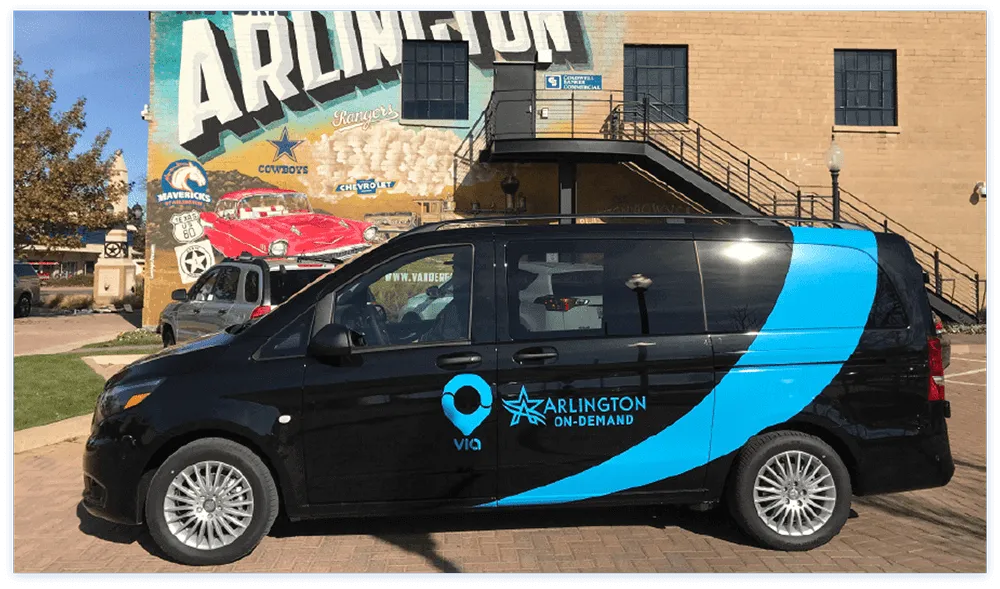
- Example: Arlington, TX replaced fixed bus routes with Via-powered on-demand vans
While riders loved the flexibility of microtransit, the standalone economics were tough. Indeed, many early microtransit startups struggled to survive, Bridj went bankrupt and Ford’s Chariot shut down in 2020, as on-demand shuttles often weren’t financially viable without public subsidy.
Via’s move to work with transit agencies provided a sustainable path: cities would subsidize routes and integrate Via’s service into the public transport network, ensuring both funding and rider demand.
This strategic pivot paid off.
Via secured contracts with transit authorities, for example, Via replaced fixed bus routes with on-demand vans in Arlington, Texas (starting 2017), and later expanded similar services in Los Angeles, Seattle, and beyond.
By late 2021, Via shut down its NYC consumer rideshare service.
Focus = partnering with transit systems, not competing with them.
This marked the end of Via’s direct B2C experiment and the full embrace of its role as a technology partner to transit systems.
2. Expanding the TransitTech Product Suite
As Via pivoted, it also broadened its product offerings to tackle various transportation needs.
The core technology, smart algorithms for pooling and routing shared rides, proved adaptable to many use cases.
Via’s core routing algorithm became a platform:
- Paratransit for elderly and disabled riders
- School bus routing (NYC Dept of Education)
- Corporate and campus shuttles
- Non-emergency medical transport
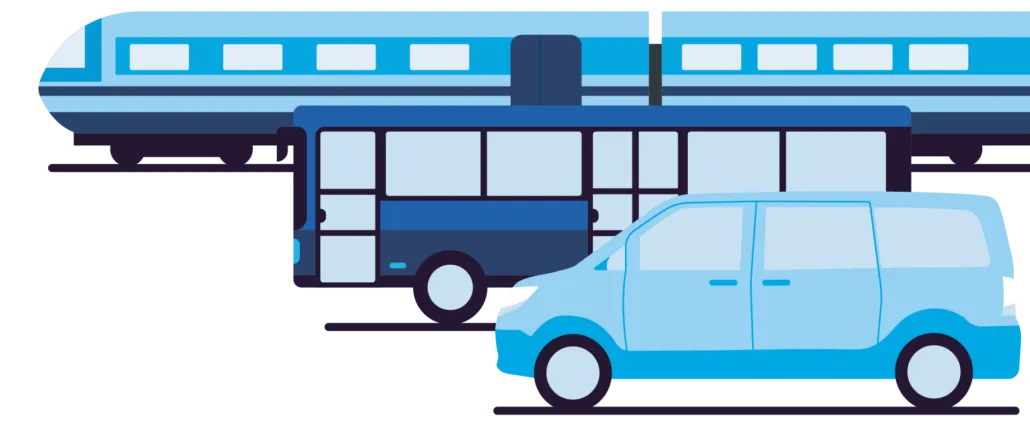
Crucially, Via positioned itself not just as an app, but as a full-stack transportation platform. It could offer agencies turnkey operations (drivers, vehicles, customer support) or just the software back-end, depending on the partner’s needs.
The flexibility of its SaaS platform became a selling point 🤑
Over time, Via also developed tools for fixed-route transit planning, analytics, and service design, often branding its suite as an end-to-end “TransitTech” solution.
By 2024:
- 700 partners
- 40+ countries
- Clients include Transport for London and Berlin’s BVG
Lesson: Growth comes from adapting your core tech to adjacent problems.
3. Learning from What Didn’t Work
Not every experiment along Via’s journey was a hit, but the company learned and adapted quickly.
One early lesson was that operating a purely private, app-based shuttle service in competition with Uber and Lyft was difficult to sustain.
The COVID-19 pandemic drove this point home when it brought Via’s consumer rides in NYC to a standstill in 2020. Even after demand recovered, Via saw more promise in public-sector contracts than in reviving its own rideshare brand.
The decision to sunset its NYC service in 2021, freed Via to allocate resources entirely to its higher-growth B2B projects. Similarly, Via’s experiences underscored that microtransit works best as part of the public transit ecosystem, not a standalone replacement.
Many cities now use Via’s technology for “complementary” transit, e.g. shuttles connecting riders to rail stations or serving low-density areas where buses are impractical.
Via found product-market fit by embracing this complementary role instead of insisting on a direct consumer-oriented strategy.
Another learning came from observing peers: Via differentiated itself by pursuing partnerships, while others like Bridj tried to go direct-to-consumer and failed.
The microtransit field’s shakeout taught Via that success required aligning with public agencies’ goals (e.g., equity, coverage) and securing funding support, rather than purely chasing private fares.
This adaptability, pivoting away from what didn’t work and doubling down on what did, is a hallmark of Via’s product journey.
Lesson: Product-market fit isn’t just the user — it’s the ecosystem and economics.
4. Building a Full-Stack Mobility Platform
Via’s product strategy in recent years has been to own the entire transit tech stack, end-to-end. The company made a series of acquisitions to fill gaps in its platform.
- In 2021, Via acquired Remix, a transit planning software used by city transportation planners. This move gave Via in-house tools for bus network design, route optimization, and transit data visualization, essentially upstream planning capabilities that complement Via’s on-demand operations.
- In 2023, Via took another big step by acquiring Citymapper, the journey-planning app known worldwide for helping riders navigate urban transit. The goal was to integrate Citymapper’s consumer-facing trip planner into Via’s offerings, creating a unified experience where transit agencies can plan services, operate them, and inform passengers through one platform.
These acquisitions show Via’s product vision of a holistic Mobility-as-a-Service (MaaS) solution.
Rather than building everything from scratch, Via purchased technologies that extended its value proposition. The result is a robust suite: for example, a transit agency can use Via’s Remix tools to design an optimized transit network, deploy on-demand shuttles and paratransit via Via’s software, and then offer the public a Citymapper-powered app to plan and book rides across the system.
This full-stack approach strengthens Via’s moat in the TransitTech market. It also teaches a product lesson about completing the ecosystem: solving a complex problem often requires tackling multiple layers of the user experience. Via identified adjacent layers (planning and passenger-facing navigation) and brought them into the fold, making its product far stickier and more valuable to customers.
5. Staying the Course to an IPO
September 2025:
- IPO raised $493M 💸
- Valuation: $3.7B (steady from $3.5B in 2023, not hype-driven)
- Active in 30+ countries, hundreds of cities
It wasn’t an overnight consumer-tech sensation, but rather a steadily scaling B2B enterprise that methodically built out its product and proved its model in hundreds of markets.
It’s worth noting that Via’s success aligns with broader trends in transportation.
Around the world 🌎 cities are grappling with congestion and climate concerns, pushing for more efficient, sustainable transit systems. Governments are investing in mixed-mode transit and on-demand solutions to complement traditional buses and trains.
Via positioned itself right at the intersection of tech and transit policy, which gives it a stable growth runway. For product professionals, Via’s journey offers a powerful example: by staying tuned to market signals and user needs, a company can reinvent its product strategy and thrive. Via started as a scrappy ride-sharing experiment and transformed into an integral infrastructure provider.
The key takeaways
Know when to pivot, broaden your solution responsibly, and focus on creating real value (and revenue) for customers, are lessons any product leader can appreciate.
Via’s story shows that with the right vision and adaptability, even a failed experiment can evolve into a category-defining platform.

Let’s Connect
I work with teams to shape user experiences, dive into product psychology, and turn insights into strategy - whether you need hands-on help or just want to brainstorm.
Want to chat?
→ Book a call
→ Connect on LinkedIn
If you found your way here through a forward... Welcome! Subscribe for more insights on product, design, and the magic behind great software.